
Nature based Solution Training Series
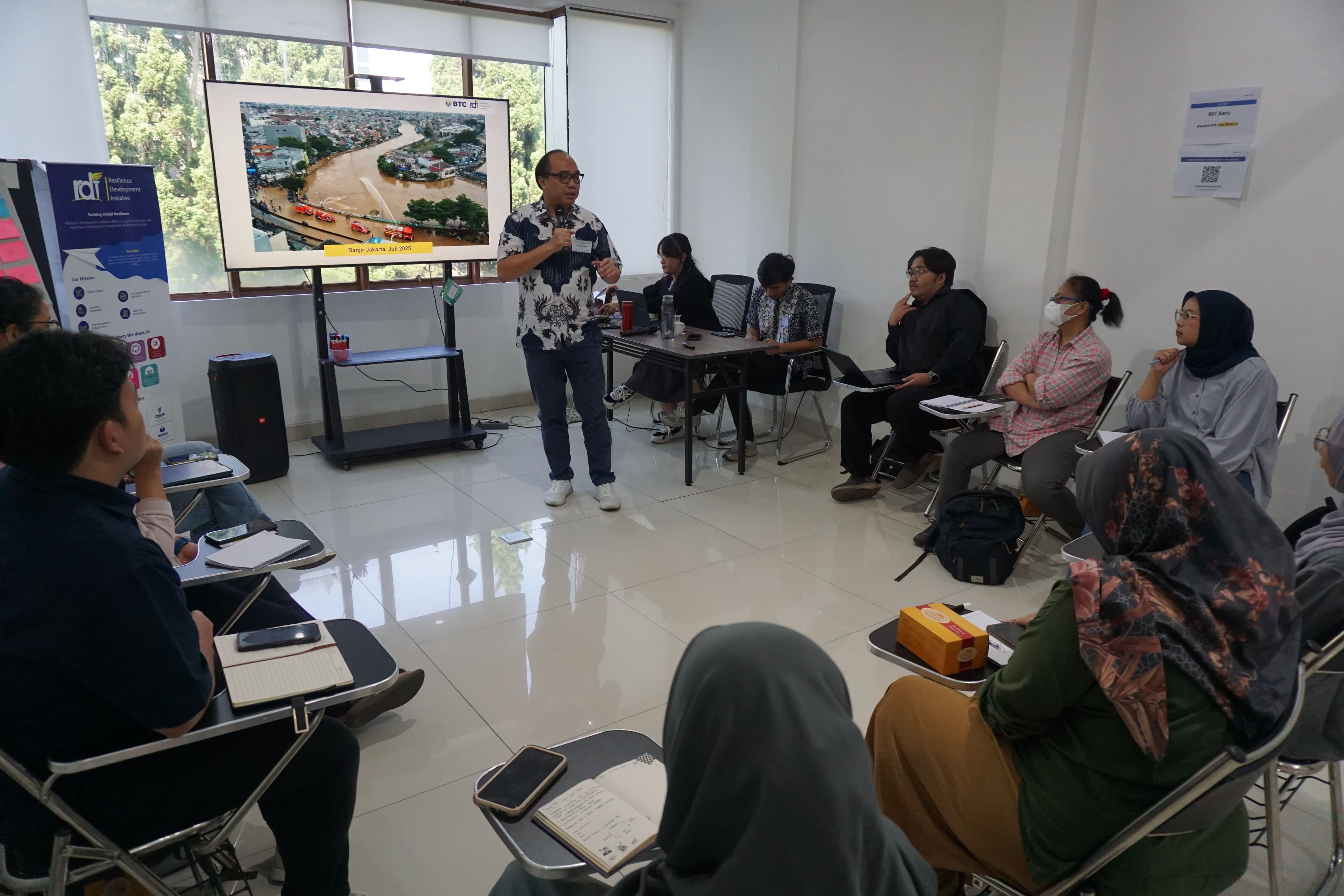

Dr. Saut Sagala

Dr. Ir. Iwan Kustiwan, M.T.
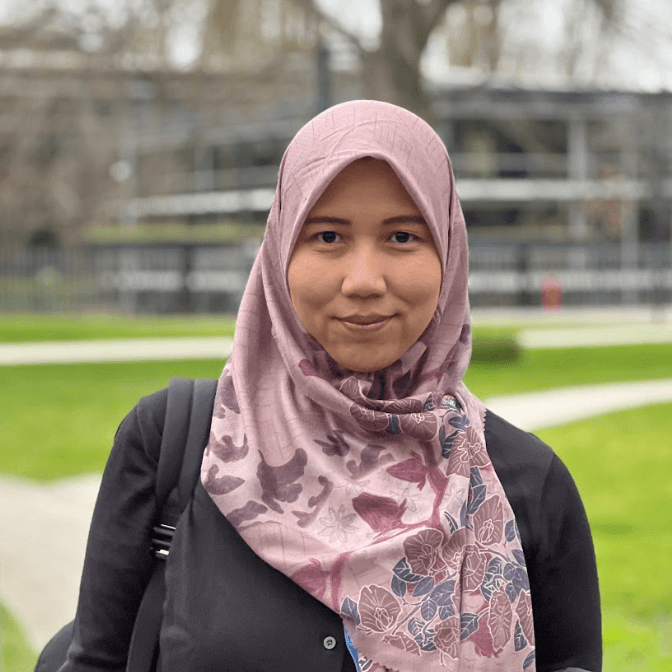
Dr. Dyah Rahmawati Hizbaron, S.Si, M.T, M.Sc
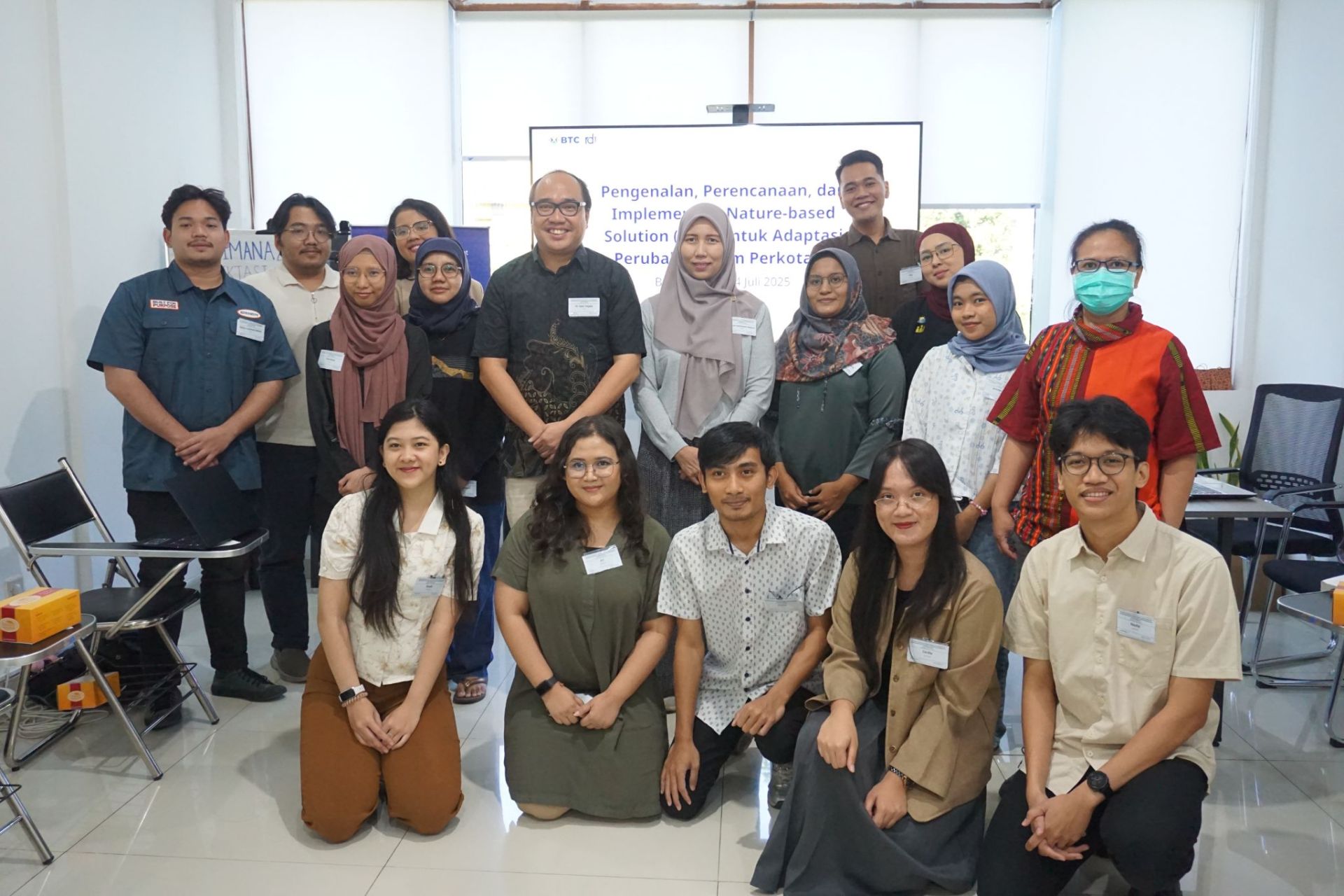 Bandung, July 22–24, 2025, The Resilience Development Initiative’s training knowledge center, Baresi Training Center (BTC) successfully conducted a three-day training titled “Nature-based Solutions (NbS): Introduction, Planning, and Implementation for Urban Climate Adaptation.” Held on 22–24 July 2025 in Bandung, the training brought together experts, researchers, and practitioners to strengthen capacity and understanding of NbS as an innovative approach to address urban climate and environmental challenges.
Rapid urbanization and climate change have intensified pressures on cities, leading to rising disaster risks such as flooding, extreme temperatures, and water scarcity. Many urban areas still rely heavily on conventional “grey infrastructure,” which is often limited in addressing complex, long-term environmental issues. Nature-based Solutions (NbS) provide a transformative alternative by utilizing natural systems such as wetlands, urban green spaces, and sustainable water management to enhance urban resilience and deliver multiple co-benefits for both people and the planet.
This training aimed to bridge knowledge gaps and equip participants with comprehensive skills in integrating NbS into urban policy, spatial planning, and climate adaptation strategies. Through lectures, group work, and field experiences, the training empowered participants to design sustainable, context-specific NbS interventions for their cities.
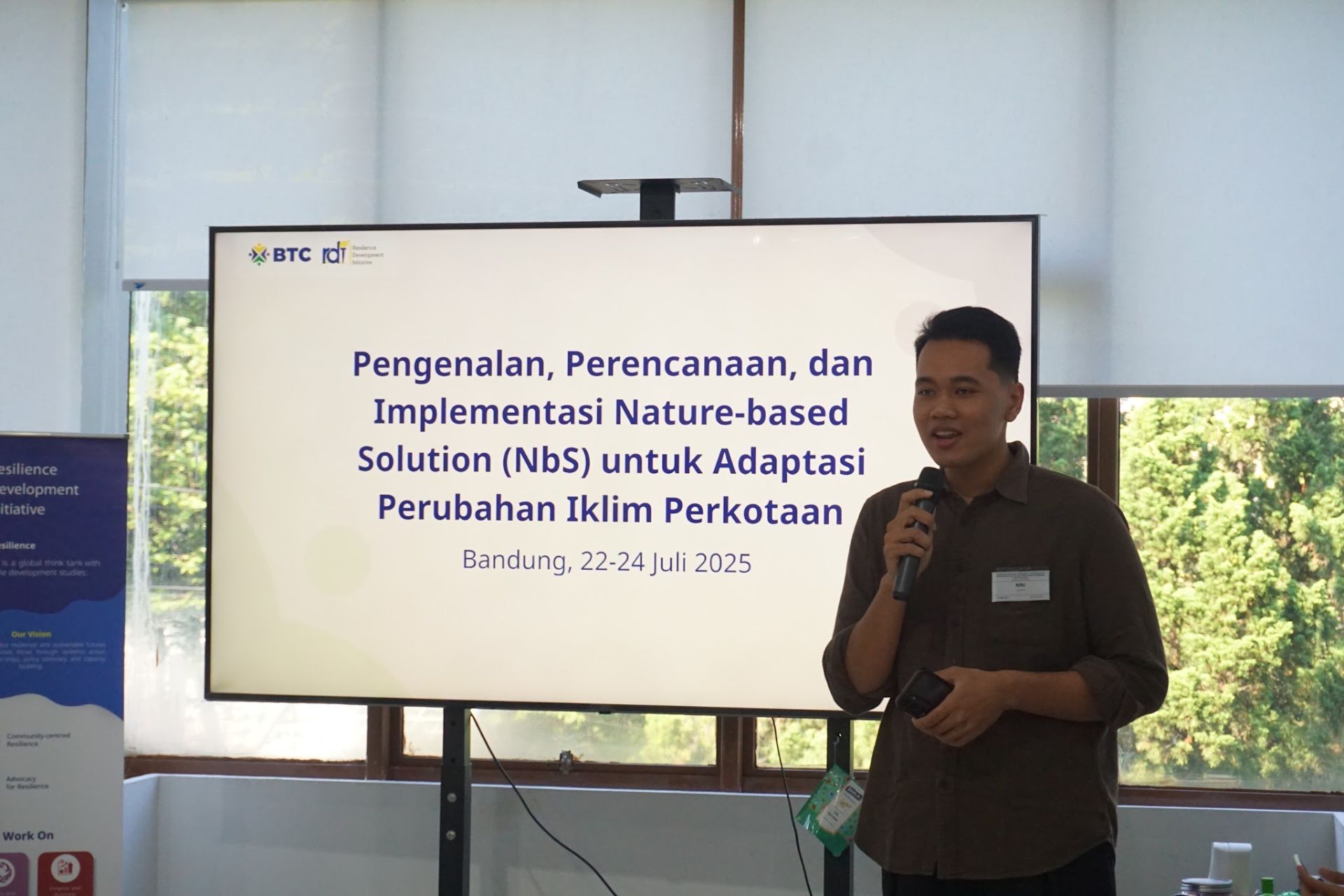
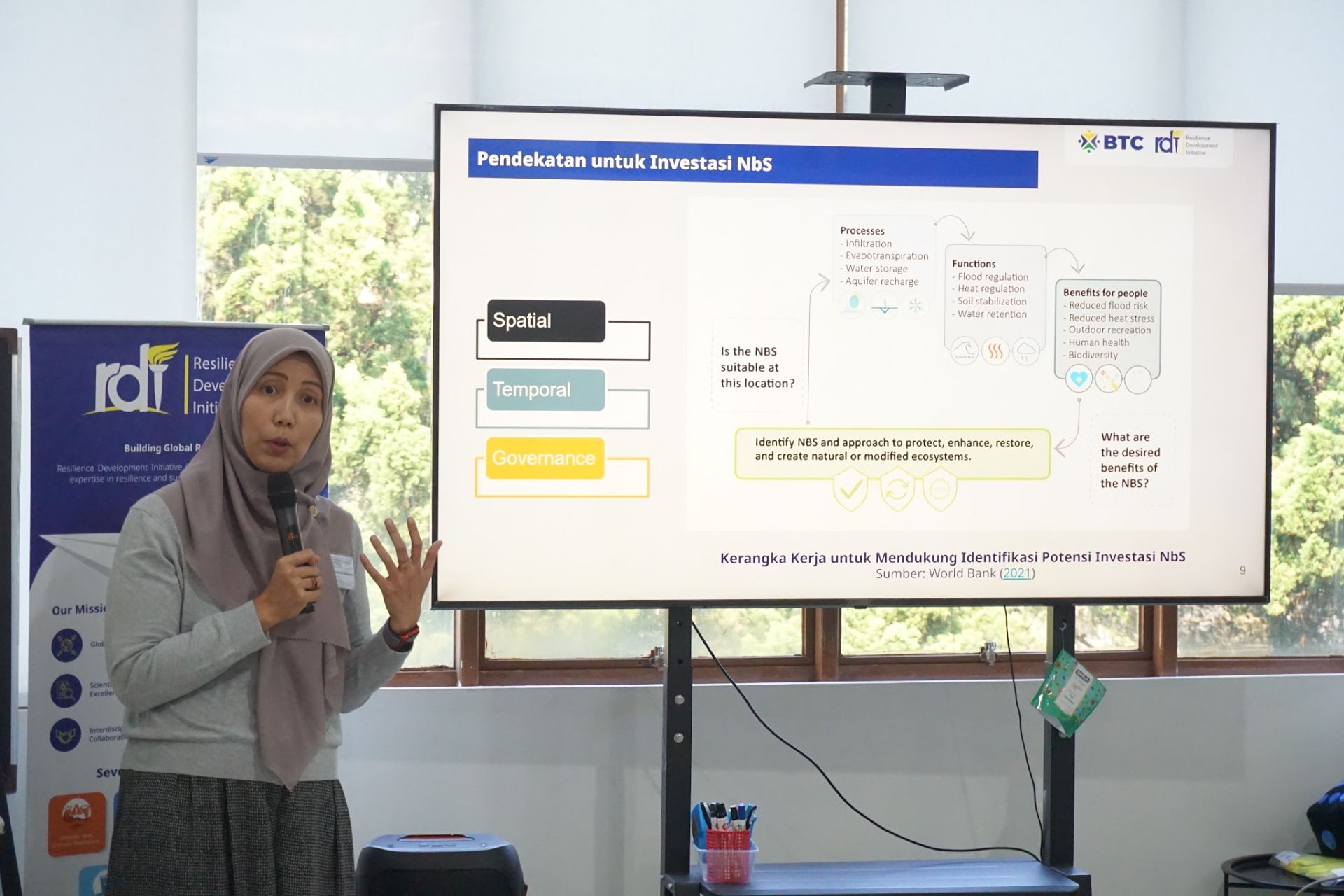 The first day opened with a session led by Dr. Dyah Rahmawati Hizbaron, Professor at Universitas Gadjah Mada, on “Introduction and Policy Development of NbS.” Participants explored the evolution of NbS from global frameworks to national level integration and discussed its role in tackling climate related urban challenges.
Through the interactive exercise “Problem Tree: Green Policy Solutions for Urban Challenges,” participants identified root causes of issues such as flooding and heat stress, then formulated potential policy-based NbS interventions. The day concluded with Group Task I, where participants analyzed two case study cities, Bekasi and Denpasar mapping their climate hazards and assessing opportunities for NbS integration.
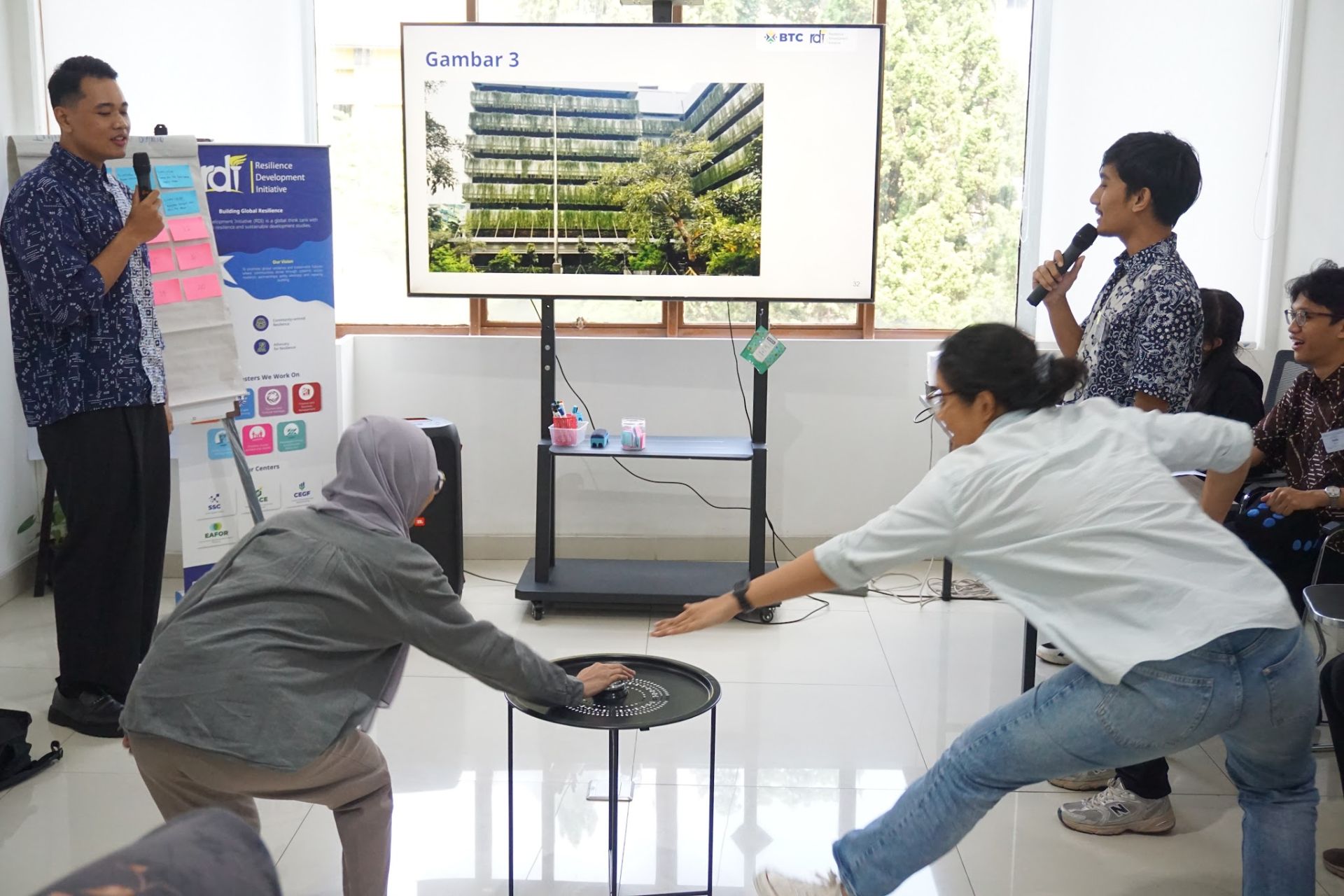
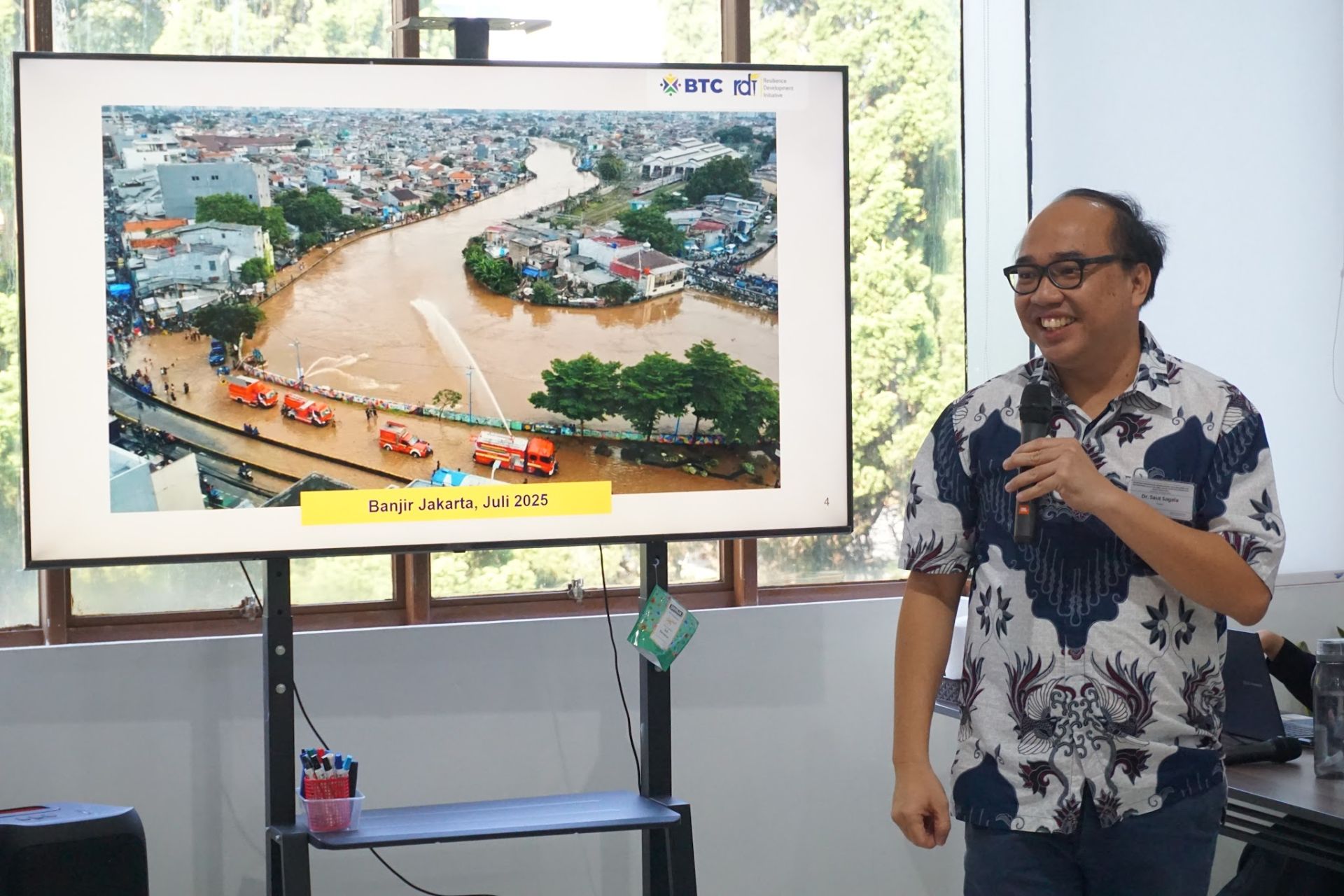 The second day began with an engaging recap and continued with sessions by Dr. Saut Sagala and Dr. Iwan Kustiwan on NbS typologies, co-benefits, and spatial planning approaches for urban adaptation. Participants learned to distinguish NbS from traditional grey infrastructure, identify key ecosystem services, and explore multi-scale planning strategies for flood reduction, heat mitigation, and biodiversity enhancement.
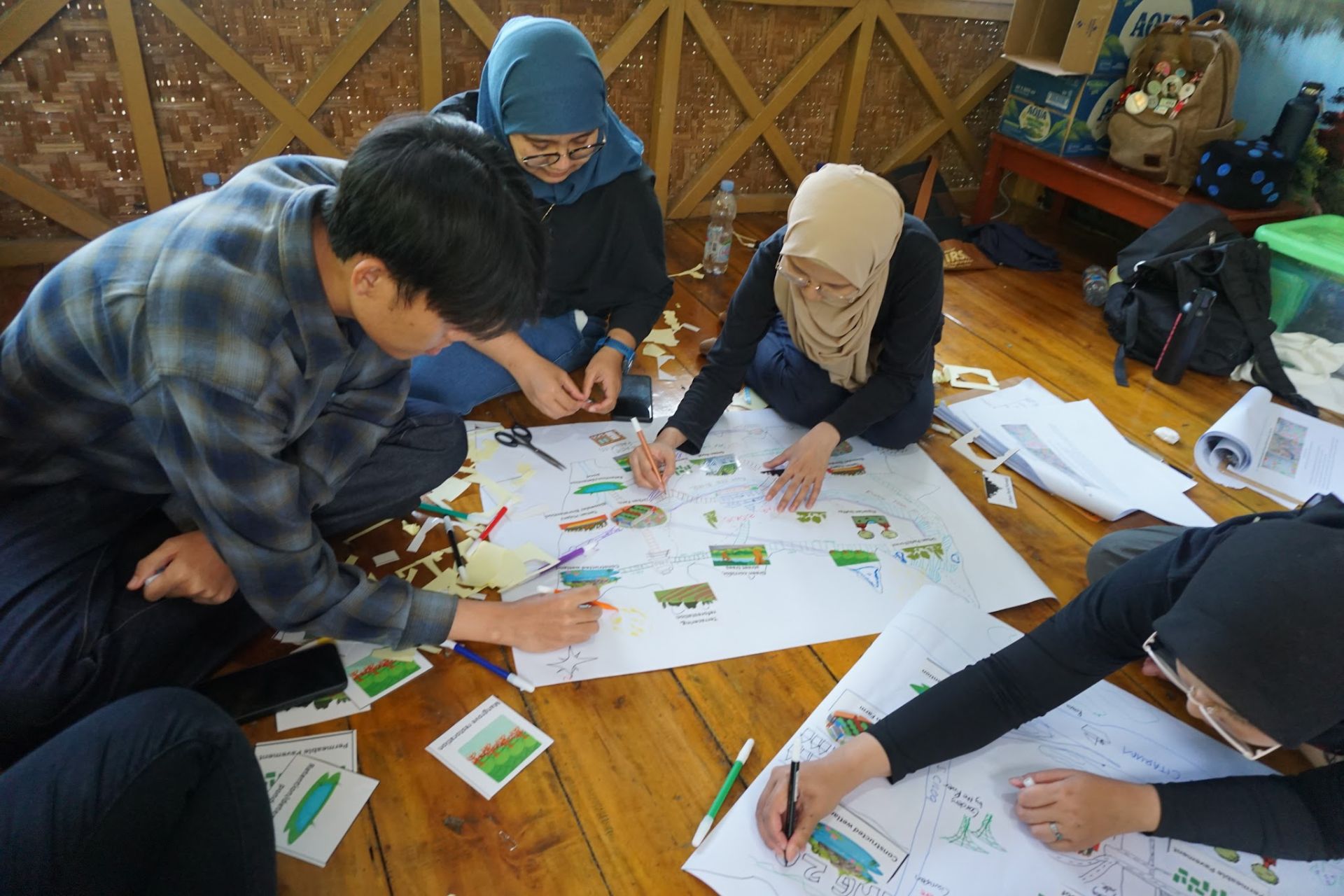
During Group Task II, participants designed NbS plans tailored to their assigned cities, considering local contexts, hazard characteristics, stakeholder engagement, and co-benefit opportunities. Discussions emphasized realistic implementation strategies that balance environmental, social, and governance aspects. The day concluded with a post-test and evaluation session, followed by the awarding of certificates and recognition for top scoring participants.
Day 3: Field Visit to Wetland Park Cisurupan
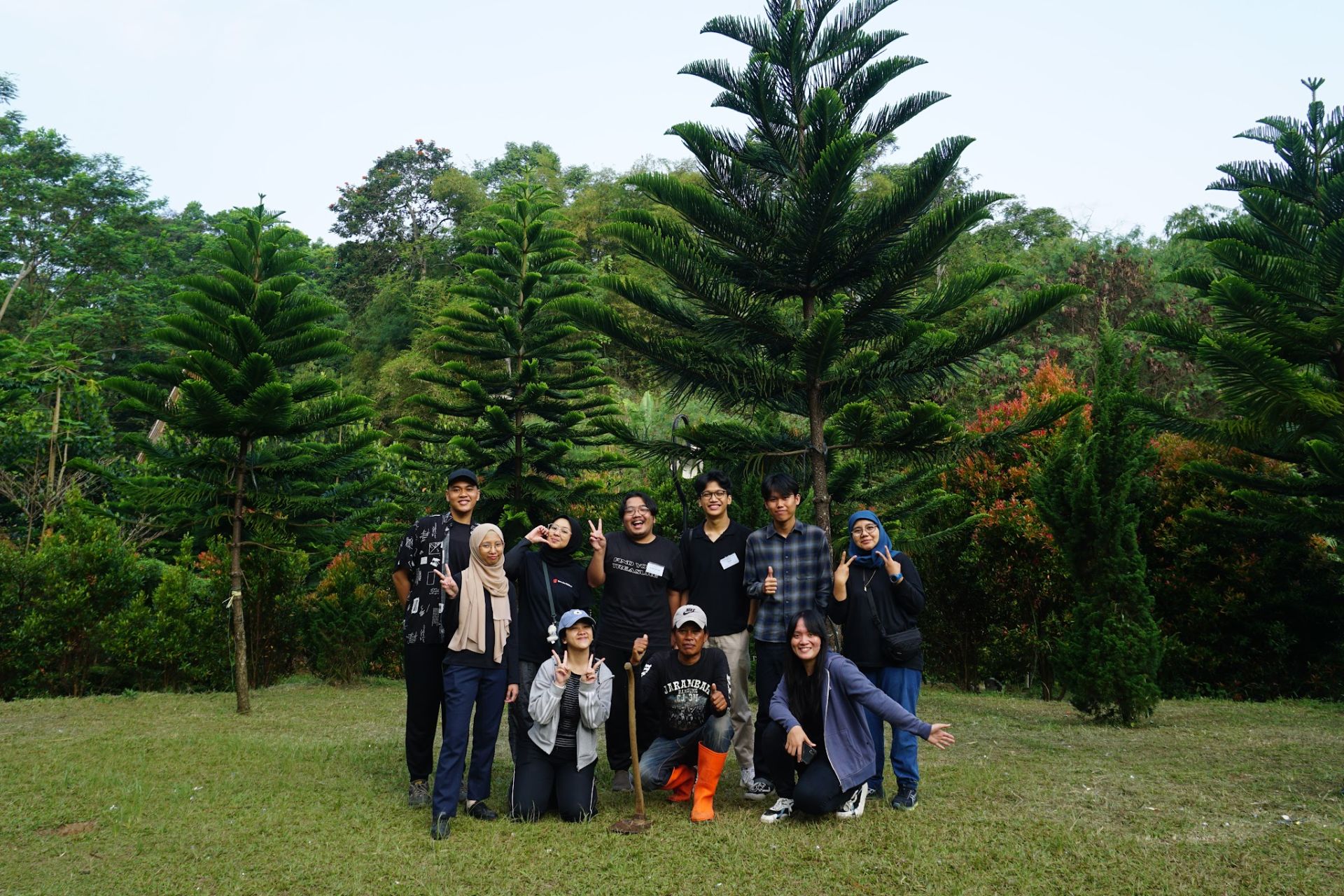 On the final day, participants conducted a site visit to Wetland Park Cisurupan, a living example of NbS implementation in Bandung. Accompanied by Dr. Saut Sagala and RDI facilitators, participants observed local hydrological and ecological systems, analyzing how wetland restoration contributes to flood mitigation, water filtration, and climate adaptation at the community level.
Activities included a Transect Walk, on-site observation, and group discussions to map findings and draft recommendations for future NbS initiatives. The interactive field learning enabled participants to connect theory with practice, deepening their understanding of urban ecosystem-based adaptation.
Participants responded enthusiastically, highlighting the training interactive group work, field visit, and expert led discussions as the most impactful components. Favorite sessions included:
NbS implementation and field learning with Dr. Saut Sagala.
Concept and typology sessions by Dr. Dyah Rahmawati Hizbaron and Dr. Iwan Kustiwan.
Real-world discussions on global NbS challenges and local applications.
While participants appreciated the structured content, some suggested extending session durations and providing a glossary of technical terms (such as “bioswale” or “grey infrastructure”) to support participants from non technical backgrounds. The field visit was particularly praised as a valuable experiential learning activity.
The NbS training series marks an important step in mainstreaming nature-based approaches for urban climate resilience in Indonesia. Future sessions will incorporate lessons from this program, including improved coordination between facilitators, early material distribution, and more in-depth practical exercises linked to real case studies. By continuing to promote knowledge sharing and applied learning, RDI and Baresi Training Center reaffirm their commitment to building the capacity of stakeholders to design, implement, and advocate Nature-based Solutions for sustainable, climate adaptive cities.