Financing Disaster Resilience Training Series

Dr. Saut Sagala

Hengki Eko Putra, M.PWK

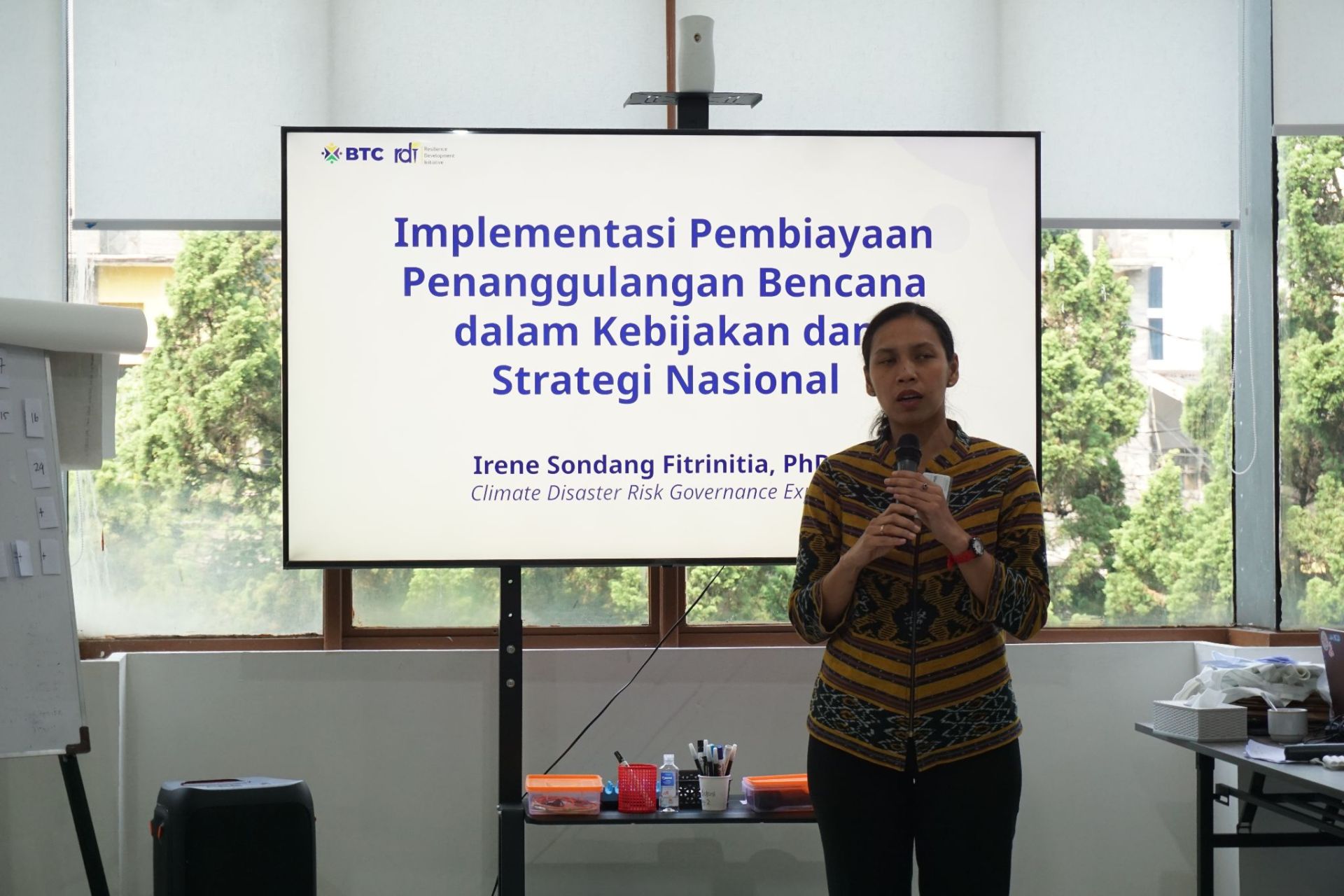
Irene Sondang Fitrinitia, PhD
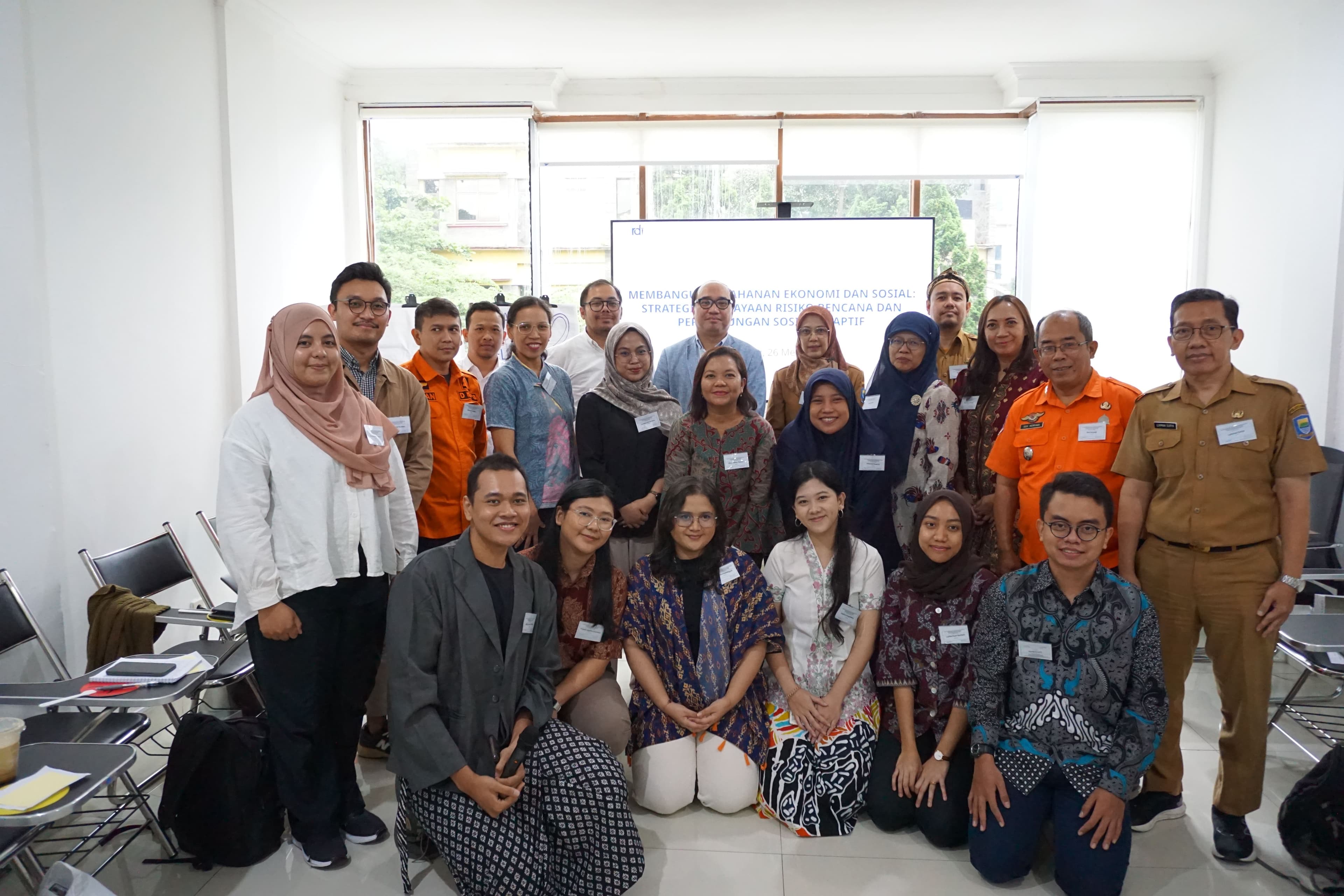
Bandung, April 24–25, 2025 – The Baresi Training Center (BTC), under the Resilience Development Initiative (RDI), successfully conducted its inaugural Disaster Risk Financing (DRF) training aimed at building financial resilience in disaster-prone areas of Indonesia. Held at Baresi Café, Bandung, the two-day event brought together professionals from government, academia, NGOs, and the private sector to explore innovative financing mechanisms for disaster management. This collaborative environment enriched the learning process and fostered deeper engagement on the topic.
Indonesia is the second most disaster-prone country globally, facing frequent natural hazards such as earthquakes, floods, and volcanic eruptions. As climate change increases the intensity and frequency of these events, the economic toll grows heavier. DRF has emerged as a critical tool to strengthen the nation’s preparedness by ensuring rapid and accountable funding mechanisms are in place before, during, and after disasters occur.
“Disaster financing is not only about having funds—it's about having the right funds at the right time,” emphasized Dr. Saut Sagala, one of the lead trainers.
 Hands-On Learning with Real-World Context
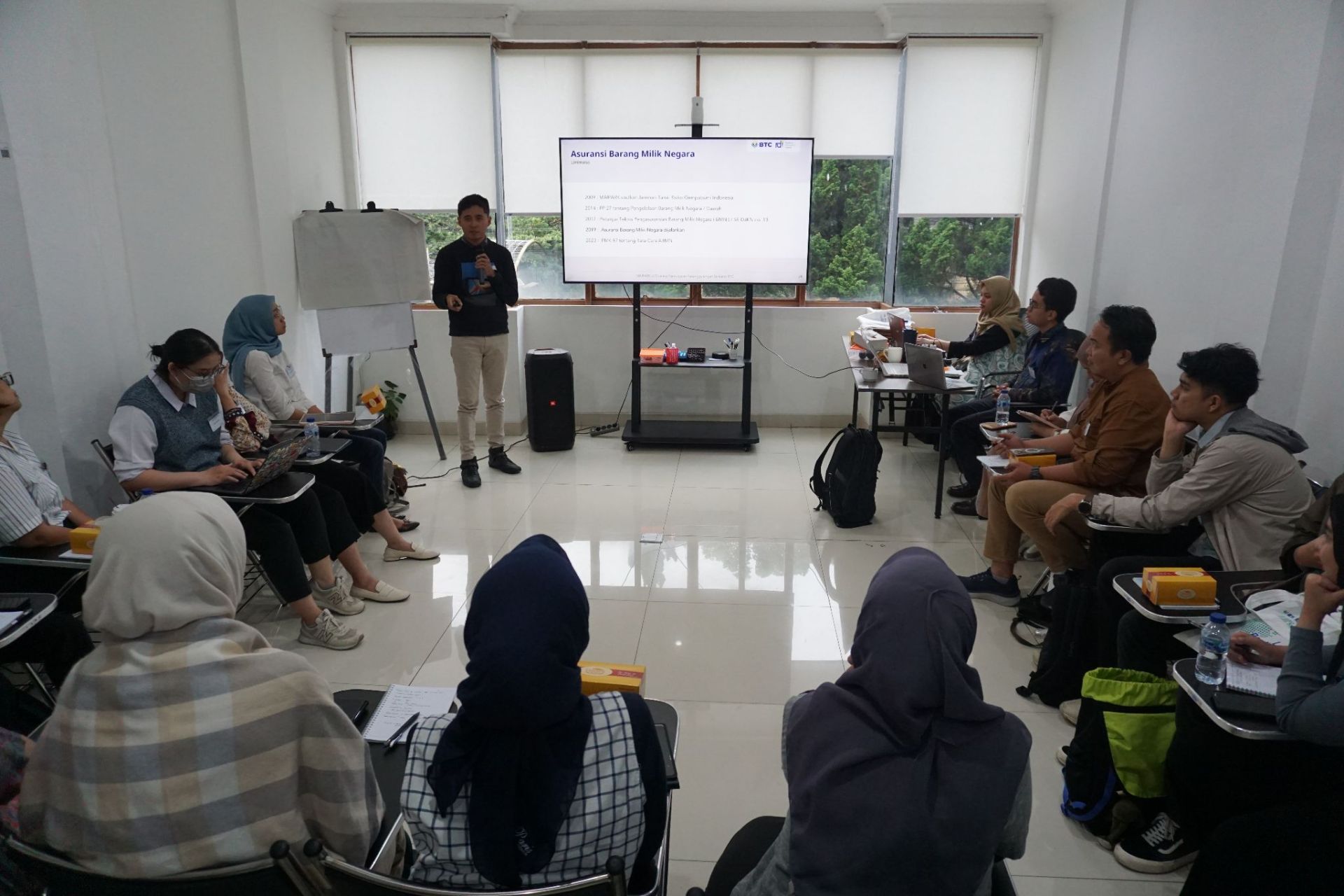
The training adopted a blended learning model combining expert presentations, group simulations, interactive discussions, and case studies. Key topics included:
Public and market-based financial instruments (e.g., contingency budgets, insurance, disaster bonds)
Climate finance innovations (e.g., green sukuk, carbon credits)
Integration of DRF into national and regional disaster and fiscal policies
Participants engaged in simulations using the 2025 Jakarta flood scenario. Divided into groups representing local government, NGOs, and private companies, they collaborated to design financial strategies and policy responses—mirroring real-world coordination in disaster events.
Day 1: Building the Foundation for Financial Resilience
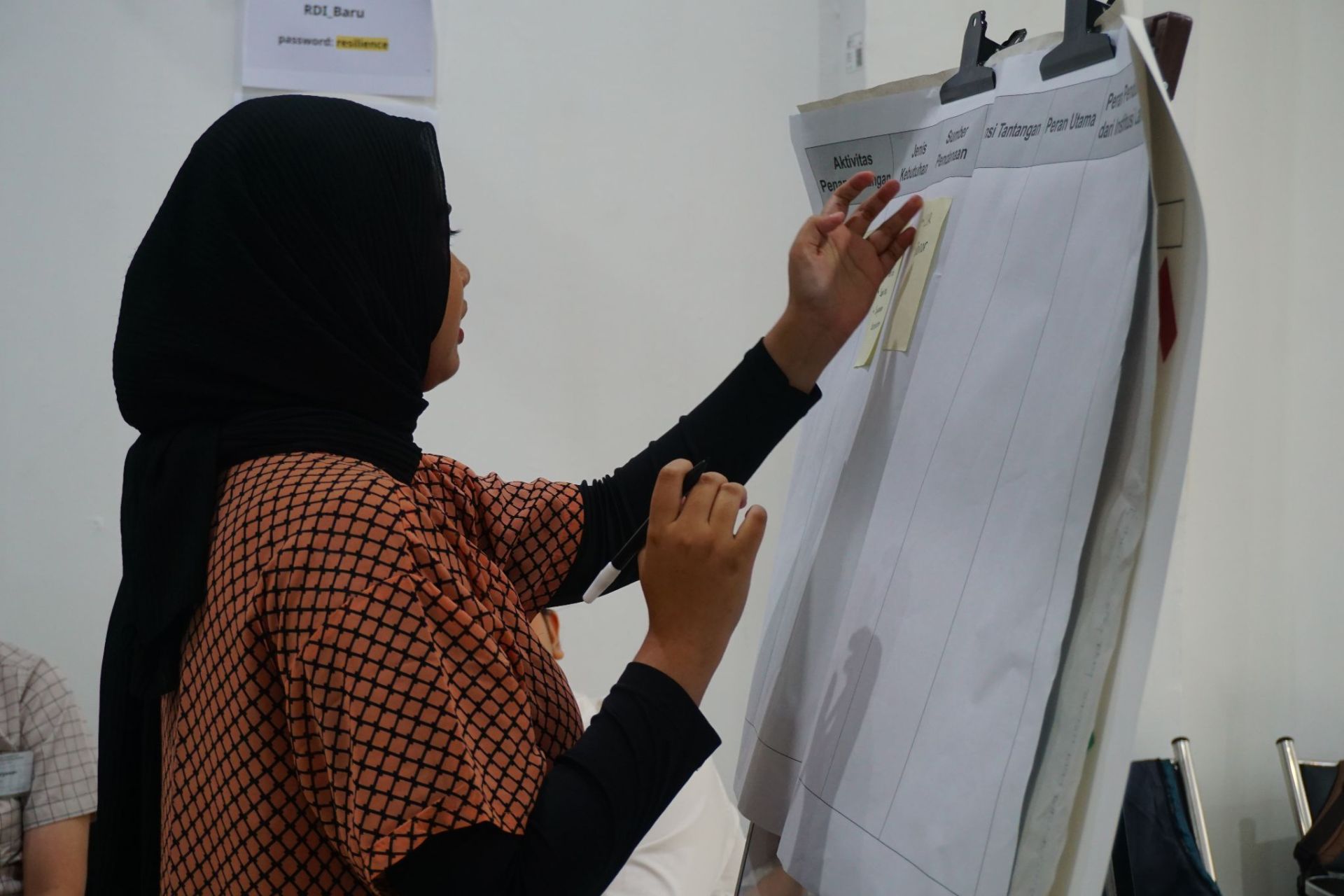
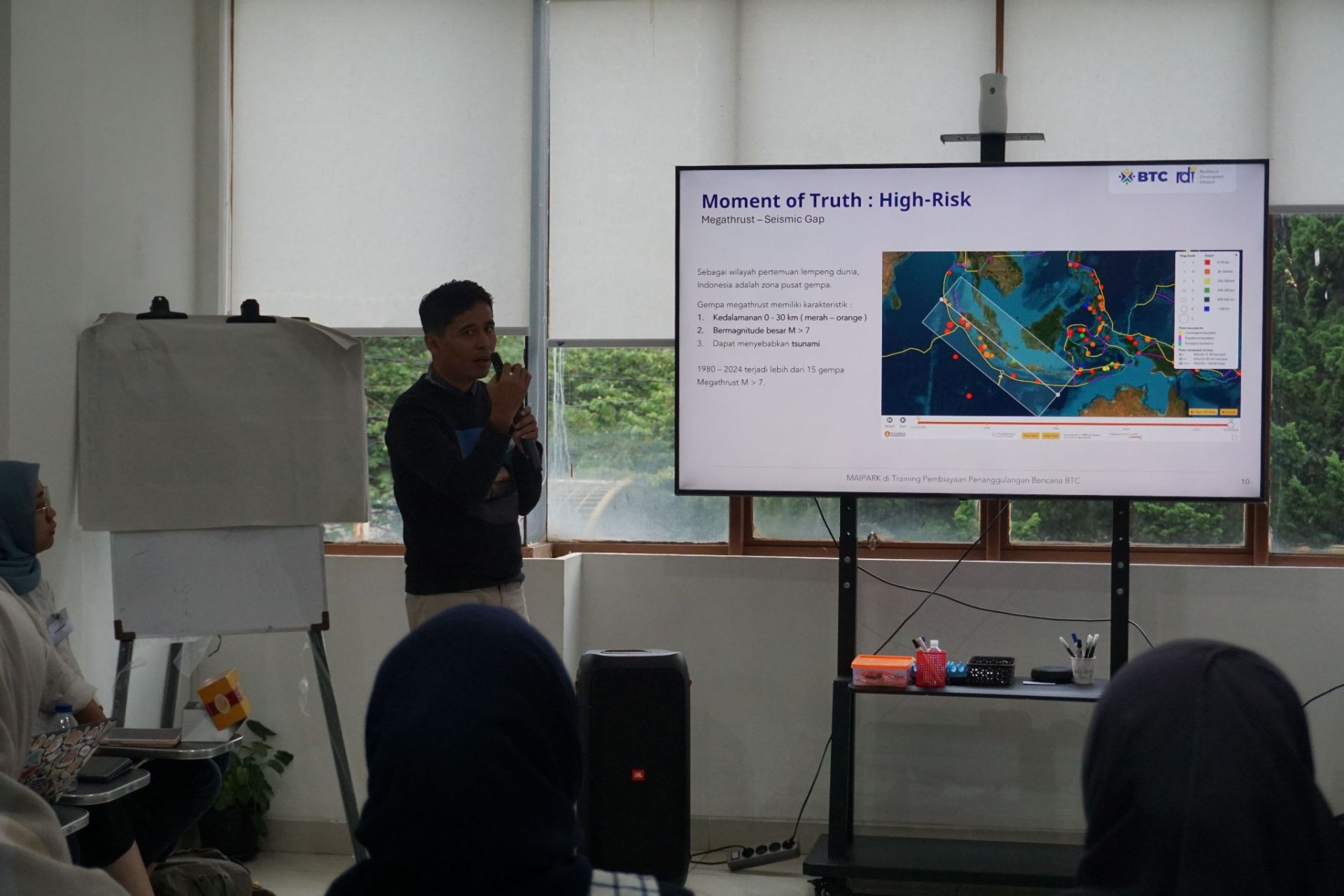 The training kicked off on the morning of April 24, 2025, with an opening session led by the RDI and facilitation team. Following a short introduction, participants completed a pre-test to assess their initial understanding of Disaster Risk Financing (DRF).
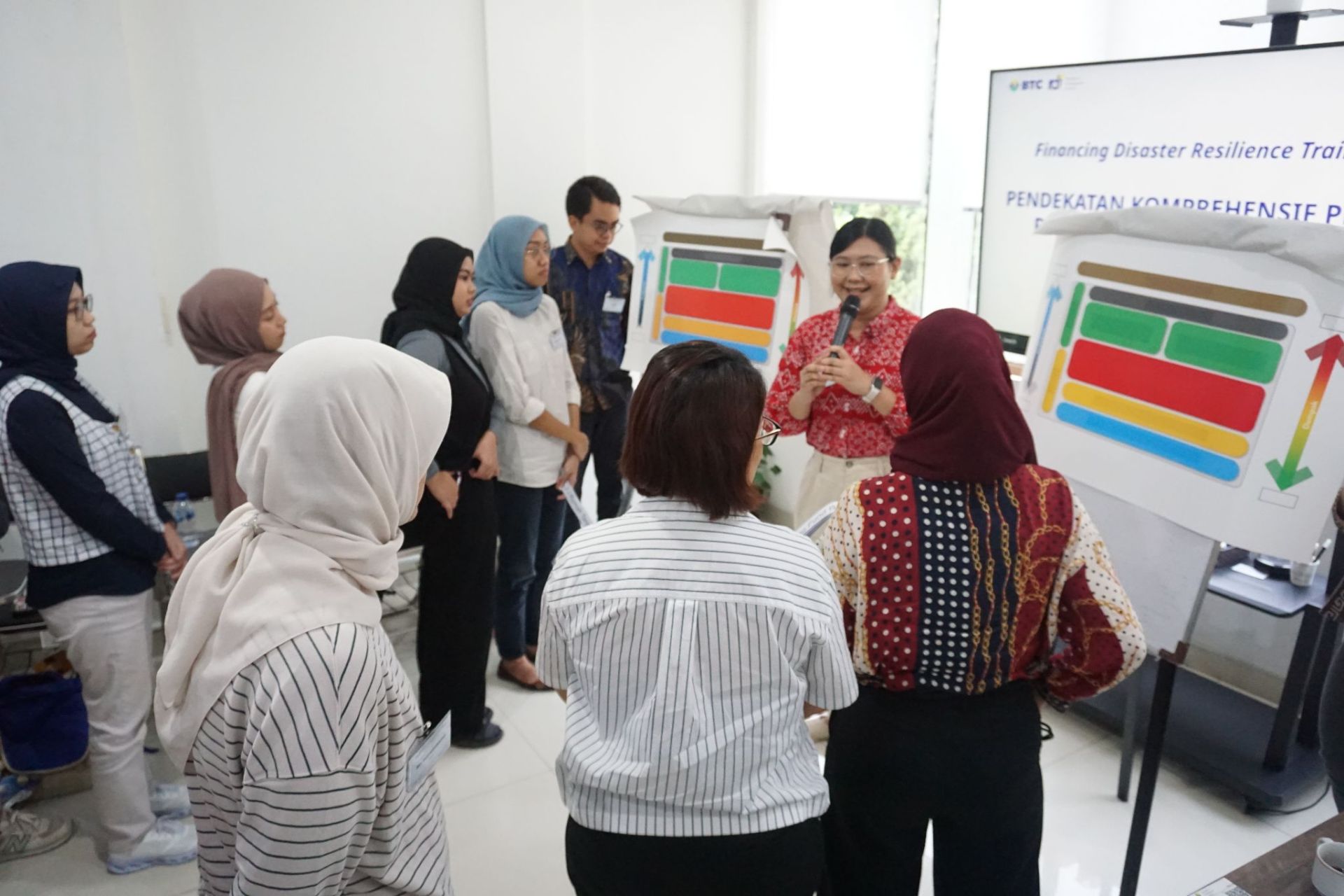
The first session was delivered by Dr. Saut Sagala, covering the topic: Introduction to Disaster Risk Financing (DRF). Through an interactive discussion, Dr. Saut explored the balance between physical and financial preparedness for disasters. He emphasized Indonesia’s ranking as the second most disaster-prone country globally and highlighted the need for accountable financing frameworks as mandated by Government Regulation No. 22/2008. Participants learned about four key DRF principles: timely and appropriate funding, risk layering, fund disbursement mechanisms, and the importance of data and analytics. The session also discussed the roles of multiple stakeholders—including government, NGOs, the private sector, and communities—in strengthening post-disaster economic resilience.
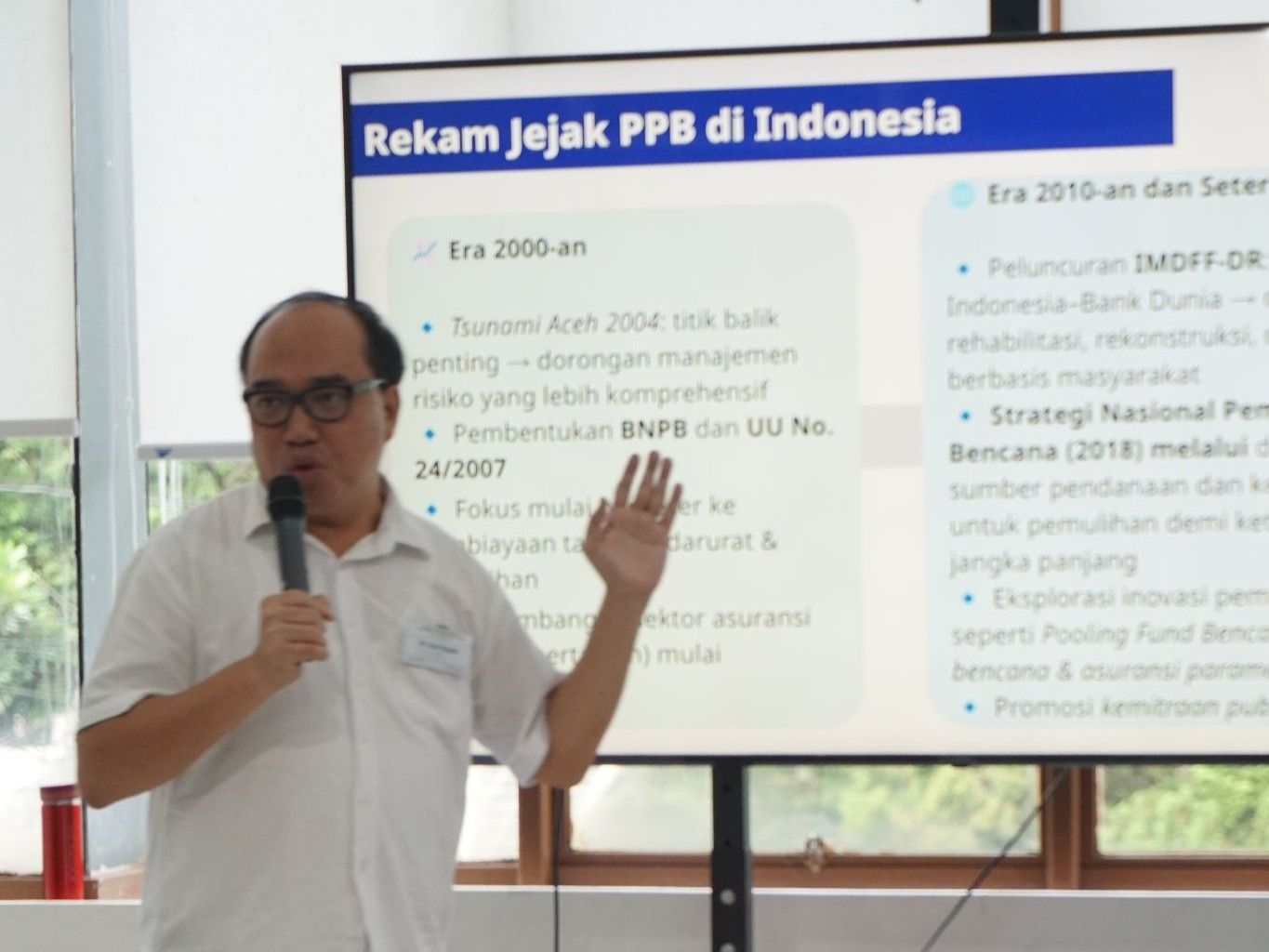
In the second session, Mr. Hengki Eko Putra introduced Public Financial Instruments for Disaster Risk. He described funding options ranging from household savings to national budgets, including donor aid, contingency credit, and insurance schemes. A case study titled "Who Pays the Bills?" illustrated the financial dilemmas disaster victims face, and the concepts of risk retention vs. risk transfer. The discussion also delved into the need for parametric insurance and disaster pooling funds (e.g., MAIPARK) as sustainable risk-sharing solutions, especially in the context of megathrust and seismic gap risks.
Before the day concluded, Mr. Hengki led the third session on Market-Based Financial Instruments for Disaster Risk. Using the Ground Motion Prediction Equation (GMPE) and data from PuSGeN 2025, he demonstrated how earthquake modeling and the SENA insurance platform can support risk assessment. The discussion addressed the distinctions between climate prediction vs. projection and the global financing challenges posed by capital flight and shrinking investment pools. Participants were then divided into working groups and assigned a case study on the 2025 Jabodetabek flood to analyze impacts, emergency responses, and stakeholder roles.
Day 2: From Policy to Practice
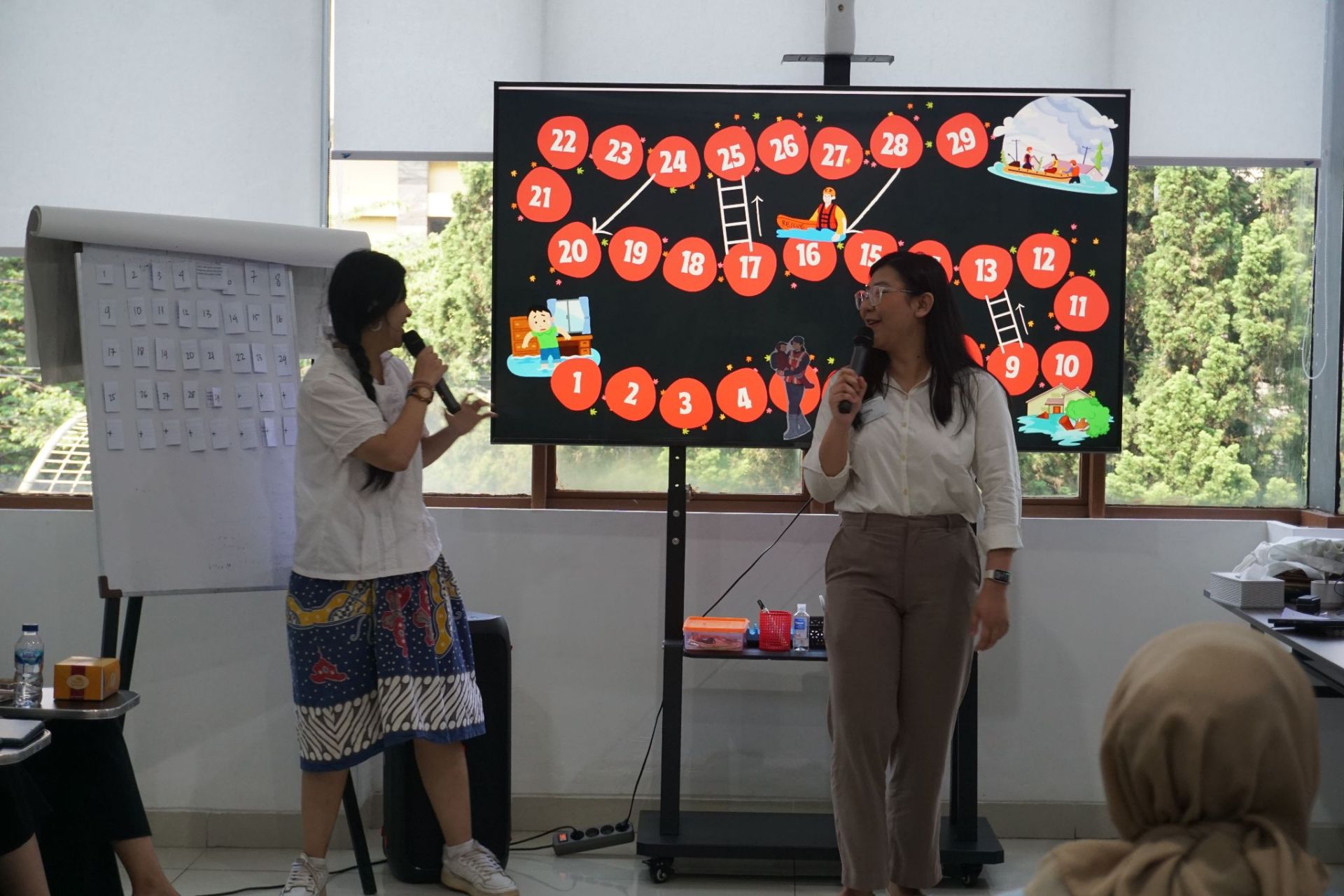 Day two began with a refreshing “Bingo Game” icebreaker to recap the first day’s materials. The morning continued with Dr. Irene Sondang Fitrinitia delivering the session on Integrating DRF into National Policy and Strategy. She explained the national budget (APBN) mechanisms for disaster financing—such as Ready-to-Use Funds (DSP), rehabilitation grants, and contingency loans—as well as local budget (APBD) allocations through the Unexpected Spending Line (BTT), which on average accounts for only 2% of local budgets.
Dr. Irene also outlined the steps for accessing DSP, from local emergency declarations to fund disbursement and auditing by BPK. She emphasized the importance of the RENAS PB 2025–2029 document, which promotes risk transfer strategies and financing innovations such as blended finance, crowdfunding, and corporate social responsibility (CSR). Challenges in the technical capacity of local disaster agencies (BPBD) and disparities in fund utilization across 38 provinces highlighted the need for stronger coordination and local capacity development.
In the afternoon, participants were divided into three stakeholder groups—Local Government, International NGOs, and the Private Sector—to draft action plans based on a case study of the 2025 Jabodetabek flood. Each group analyzed the disaster’s impact, identified response strategies, and clarified the roles of their respective sectors. Through a role-play simulation, they designed innovative financial interventions, allocated funds based on risk layering, and coordinated policy proposals.
The Local Government group highlighted urgent needs for affected residents and stressed the importance of APBD and BTT budget transparency.
The NGO group proposed a logistics aggregator model and a victim data platform.
The Private Sector group addressed the challenges of fragmented CSR efforts and the need for better coordination with public institutions.
These presentations demonstrated how cross-sector synergy is vital for effective and inclusive disaster financing.
The training concluded in the late afternoon with a post-test and participant evaluation. Overall, the event significantly strengthened participants' understanding of DRF frameworks, financial instruments, and national policy integration. Attendees left equipped with enhanced skills in risk analysis, financial modeling, and collaborative action planning.
Key Takeaways for Participants
The training equipped participants with:
A strong foundation in DRF principles, instruments, and global best practices
Skills to assess disaster-related financial risks using risk modeling
Strategies for integrating DRF into existing policy and budgeting frameworks
Tools to advocate for DRF in their respective institutions and networks
The event also encouraged the formation of cross-sectoral peer networks for continued collaboration and innovation in the field.
What’s Next?
To build on this momentum, the BTC and RDI team recommend several next steps:
Advanced workshops on technical topics like insurance pricing and climate finance
Creation of an integrated disaster-finance data platform
Establishment of a regular coordination forum among public, private, and civil society actors
Ongoing capacity building for local disaster management agencies (BPBD)
“This training is a steppingstone toward a more resilient Indonesia—where disaster funding is fast, fair, and forward-thinking,” said Dr. Irene Sondang, a climate risk governance expert.