
Adaptive Social Protection Series

Dr. Saut Sagala

Dr. Indraswari

Dyah Ayu Larasati, M.Sc
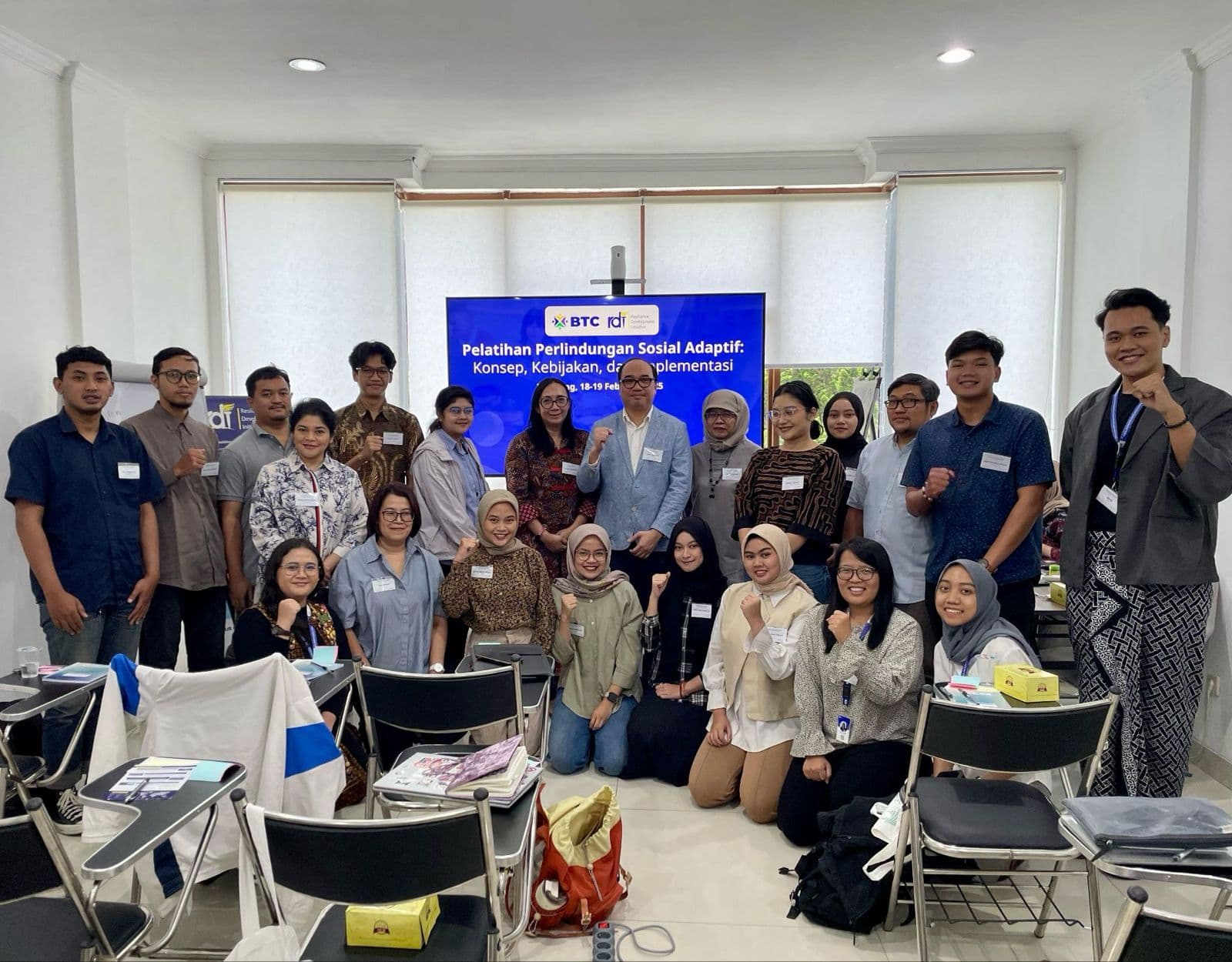
The Resilience Development Initiative’s training knowledge center, Baresi Training Center, has successfully conducted the first session of its Training Series, titled “Adaptive Social Protection: Concept, Policy, and Implementation.” This training featured expert trainers from diverse backgrounds, providing a broad range of perspectives on the topic. The training covered key aspects of adaptive social protection (ASP), including an introduction to its core concepts, an in-depth understanding of vulnerable groups, and discussions on regulations, policies, and collaboration essential for effective implementation. The training not only offered valuable insights from experts but also featured interactive sessions and discussions, providing participants with an opportunity to contribute their own perspectives and experiences. This collaborative environment enriched the learning process and fostered deeper engagement on the topic.
Why Adaptive Social Protection Important?
Indonesia's geographical position along the Pacific Ring of Fire makes it highly vulnerable to disasters. This condition is exacerbated by climate change, posing significant threats to food security and livelihoods, particularly for vulnerable groups. In response, Indonesia is expanding its current social protection system to be more holistic and adaptive, integrating social assistance, empowerment, and rehabilitation across all life stages to enhance resilience and address these growing risks.
Adaptive Social Protection: an Introduction
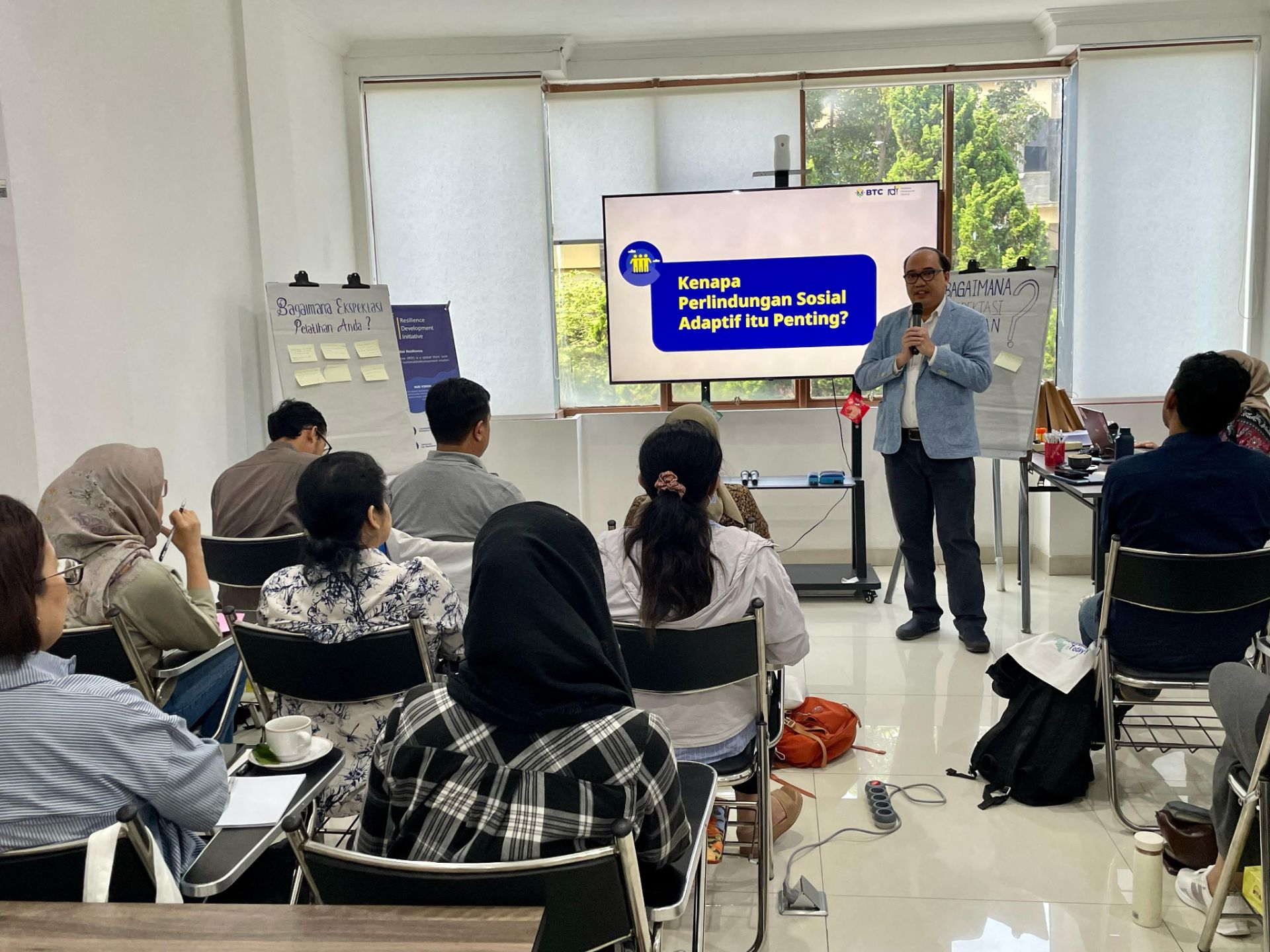
The first trainer is Dr. Saut Sagala, a global resilience expert with experience in interdisciplinary studies, focusing on ASP, disaster risk management, climate change adaptation, social capital, and risk financing. Dr. Saut is presenting an introduction to the concept of ASP. This presentation is important to give the participants the context of why ASP is relevant in practical and academic ways. The opening session sets the stage for understanding ASP's core concepts, principles, and significance in building resilience for vulnerable communities.
With increasingly severe future risks, such as disasters and climate change, regular social protection alone is insufficient. This condition is relevant in Indonesia as one of the most disaster-prone countries. Individuals with vulnerabilities, including low-income populations, people with disabilities, women, pregnant women, and children, require more adaptive social protection schemes to adapt to these risks.
ASP is an expanded and more comprehensive version of regular social protection, combining social protection, climate change adaptation (CCA), and disaster risk reduction (DRR). ASP aims to help the communities prepare for, cope with, and adapt to shocks. The effectiveness of ASP relies on four key pillars, including institution and partnership, program delivery mechanisms, data and information systems, and financing strategies. Strengthening these components is essential to building a robust and responsive ASP system. Dr. Saut also shared insights from Indonesia and other countries on ASP implementation, highlighting key lessons learned and providing participants with a practical understanding of how to effectively implement ASP.
Understanding Vulnerable Groups in Adaptive Social Protection
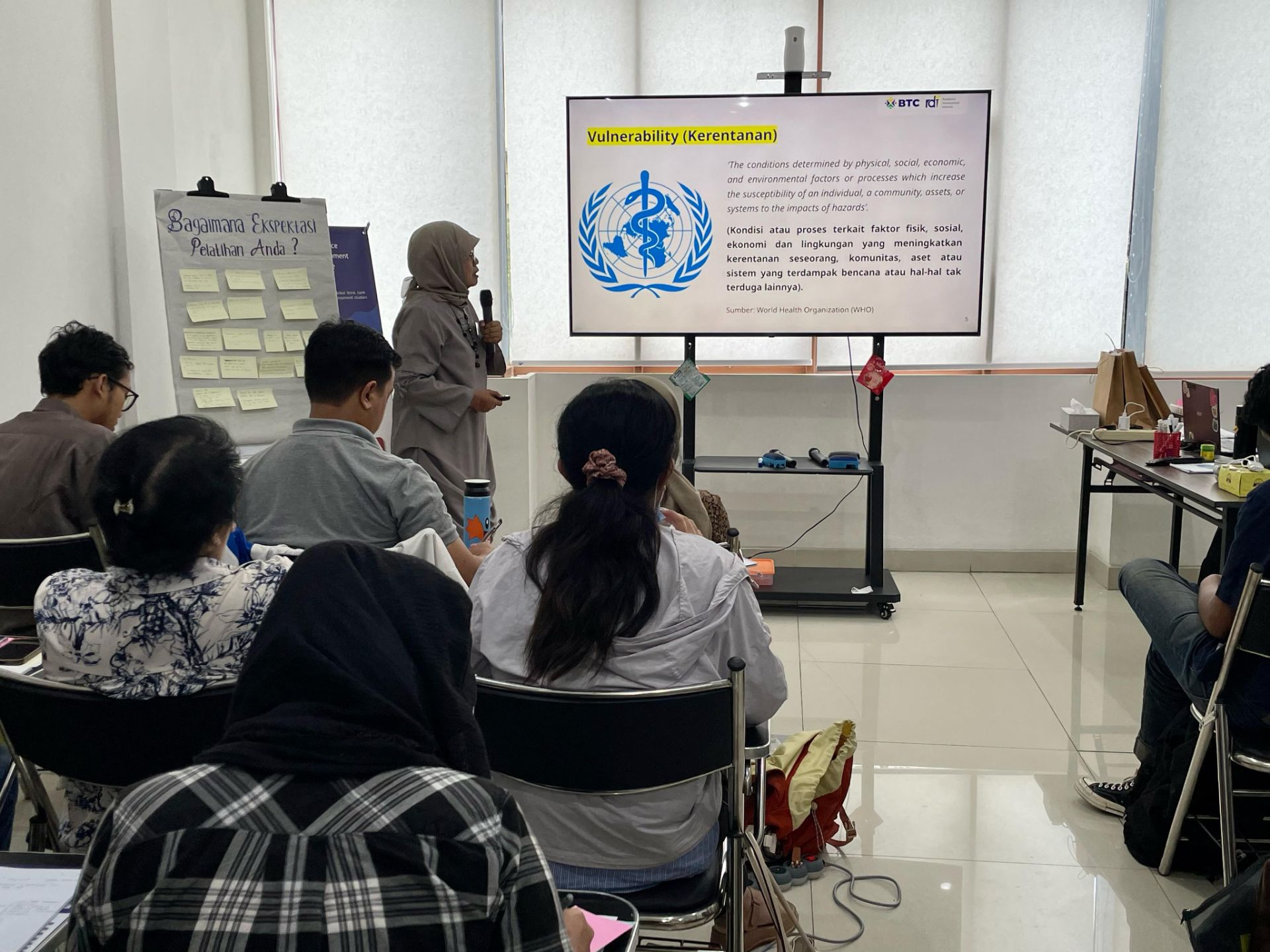 The second trainer, Dr. Indraswari, an expert specializing in Gender, Disability, and Social Inclusion (GEDSI), and Human Rights. Her presentation revolves around understanding and identifying vulnerable groups in ASP. As an integral part of ASP, understanding vulnerable groups is essential.
In Indonesia, these groups include, but are not limited to, women, low-income individuals, people with disabilities, Indigenous communities, and other context-dependent populations. Dr. Indraswari emphasized that labeling a community as vulnerable is highly context-dependent. For example, the Chinese-Indonesian community is not generally considered vulnerable, but they faced extreme vulnerability during the May 1998 riots. Various factors, such as disasters, pandemics, and conflicts, can further exacerbate vulnerability.
Dr. Indraswari used the context of COVID-19 in Indonesia where vulnerable groups continue to face significant challenges in accessing, participating in, controlling, and benefiting from social protection programs. To enhance their participation and ensure broader coverage of social protection benefits, it is crucial to integrate social inclusion into the implementation of ASPn policies.
Dr. Indraswari also highlights challenges in ensuring social inclusion for vulnerable groups within the four key pillars of ASP. In the institutional and partnership pillar, institutions and partners representing vulnerable groups have not been adequately involved in the ASP framework. In the program design and delivery pillar, the diverse needs of vulnerable groups remain insufficiently accommodated in the design and mechanisms of social protection programs. The data and information pillar lacks an integrated system linking data on disasters, climate change, and social protection with information on the specific needs of vulnerable groups. Lastly, in the financing pillar, the social protection budget remains inadequate, either due to unavailability or insufficient allocation to address the needs of vulnerable groups.
Regulation, Policy and Partnership to Support the Implementation of Adaptive Social Protection
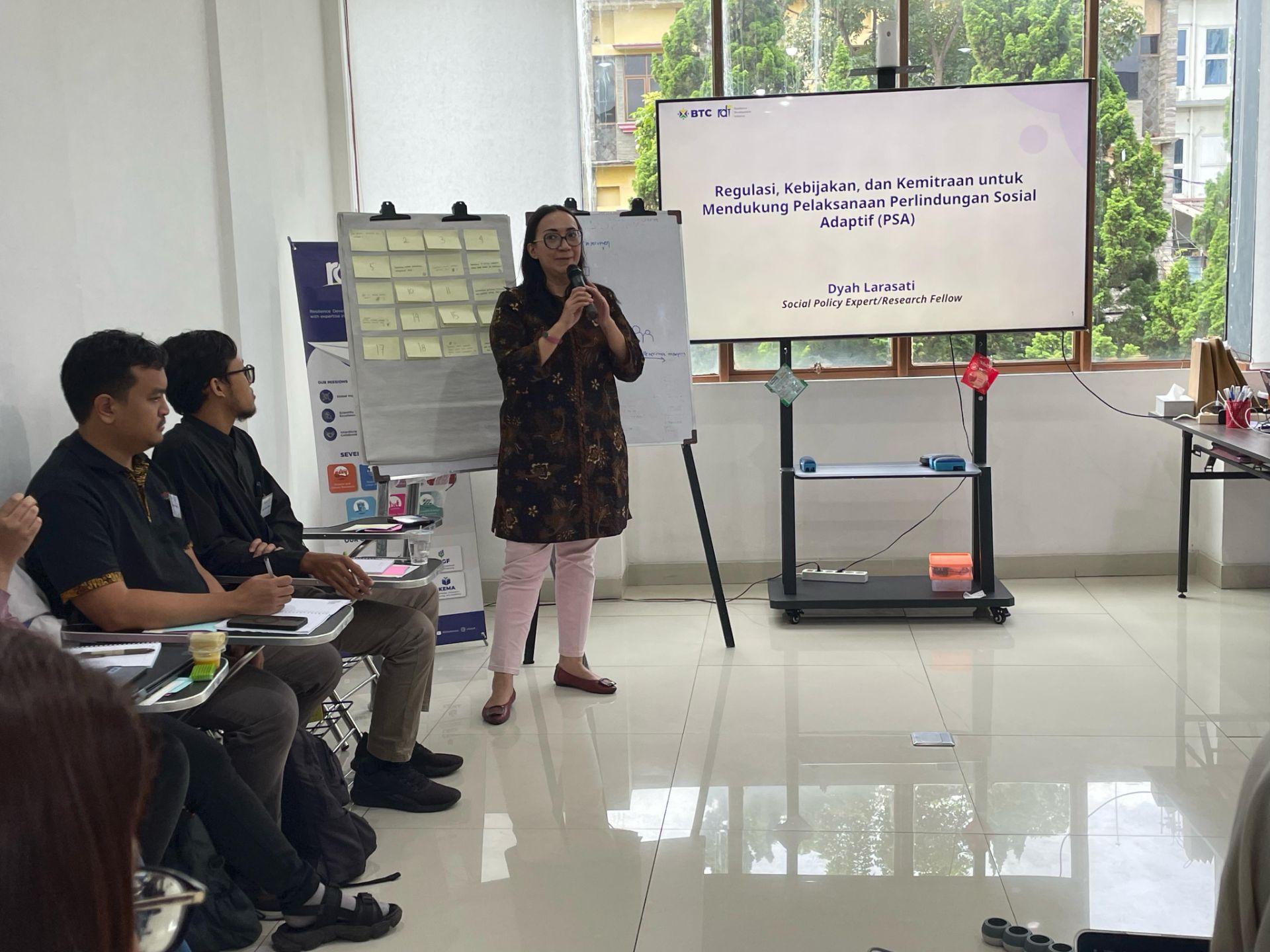 The third trainer is Dyah Larasati M.Sc, a social policy expert with working experience with the TNP2K and other consultancy works. She advances in designing social protection programs, social inclusion in policy development, and developing economic empowerment strategies
She explored how regulations, policies, and partnerships support the implementation of ASP. Although ASP has not been formally recognized in existing regulations, several policies already incorporate elements of social protection, such as the National Social Security System (Sistem Jaminan Sosial Nasional), Social Welfare Law (Kesejahteraan Sosial), and the Law on Poverty Alleviation (UU Penanganan Fakir Miskin). Regulations play a crucial role in ensuring the effective implementation of adaptive social assistance.
She also emphasized the importance of having a champion within the government to drive the advancement of ASP and secure its formal recognition in policies and regulations. However, the government is not the only actor responsible for implementing ASP. The private sector, academia, the public, and the media also have essential roles in strengthening ASP implementation. Therefore, collaboration among these sectors is essential to ensuring the effective implementation of ASP.
Group Activity: Action Plan for Adaptive Social Protection Implementation
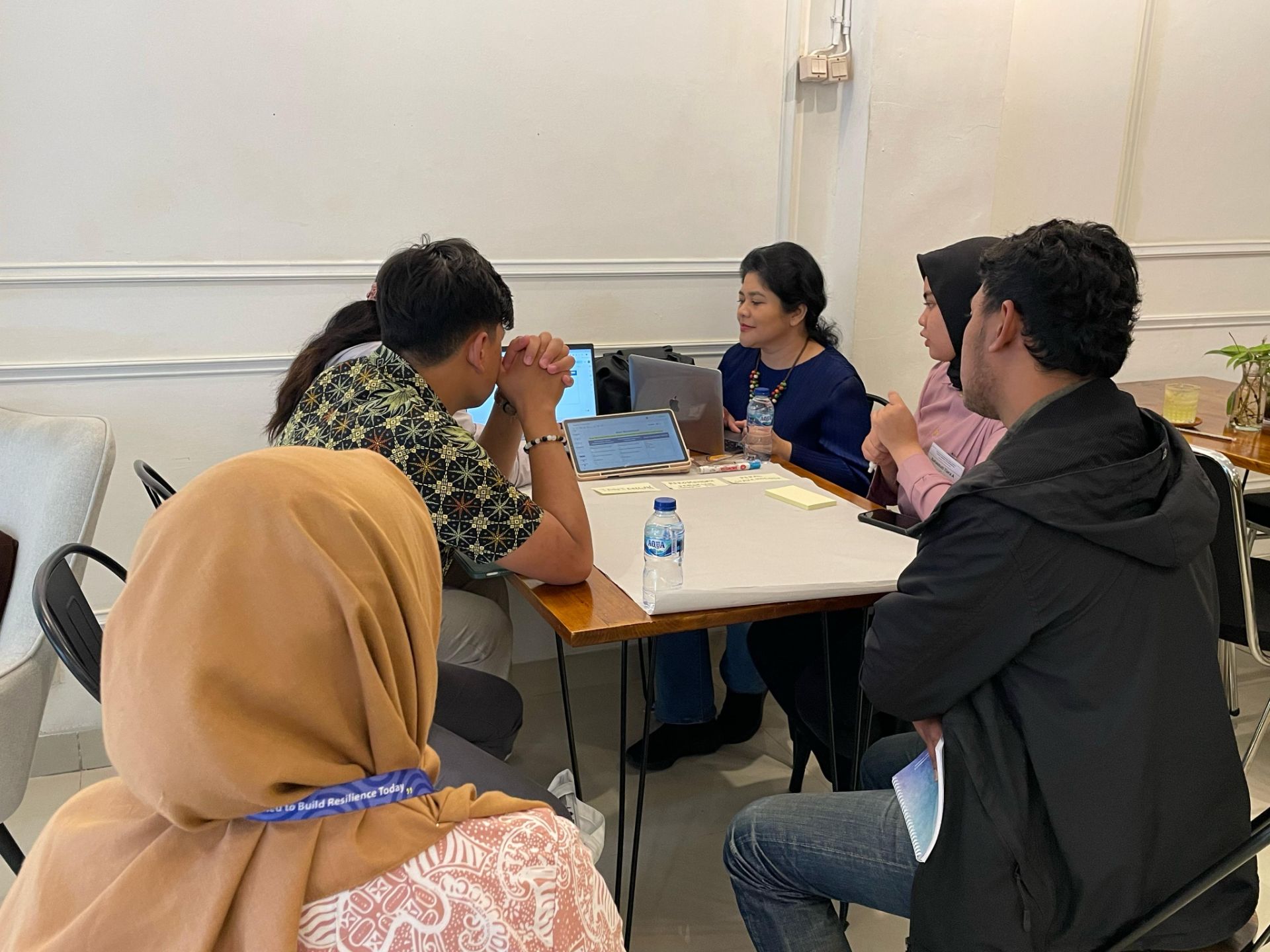
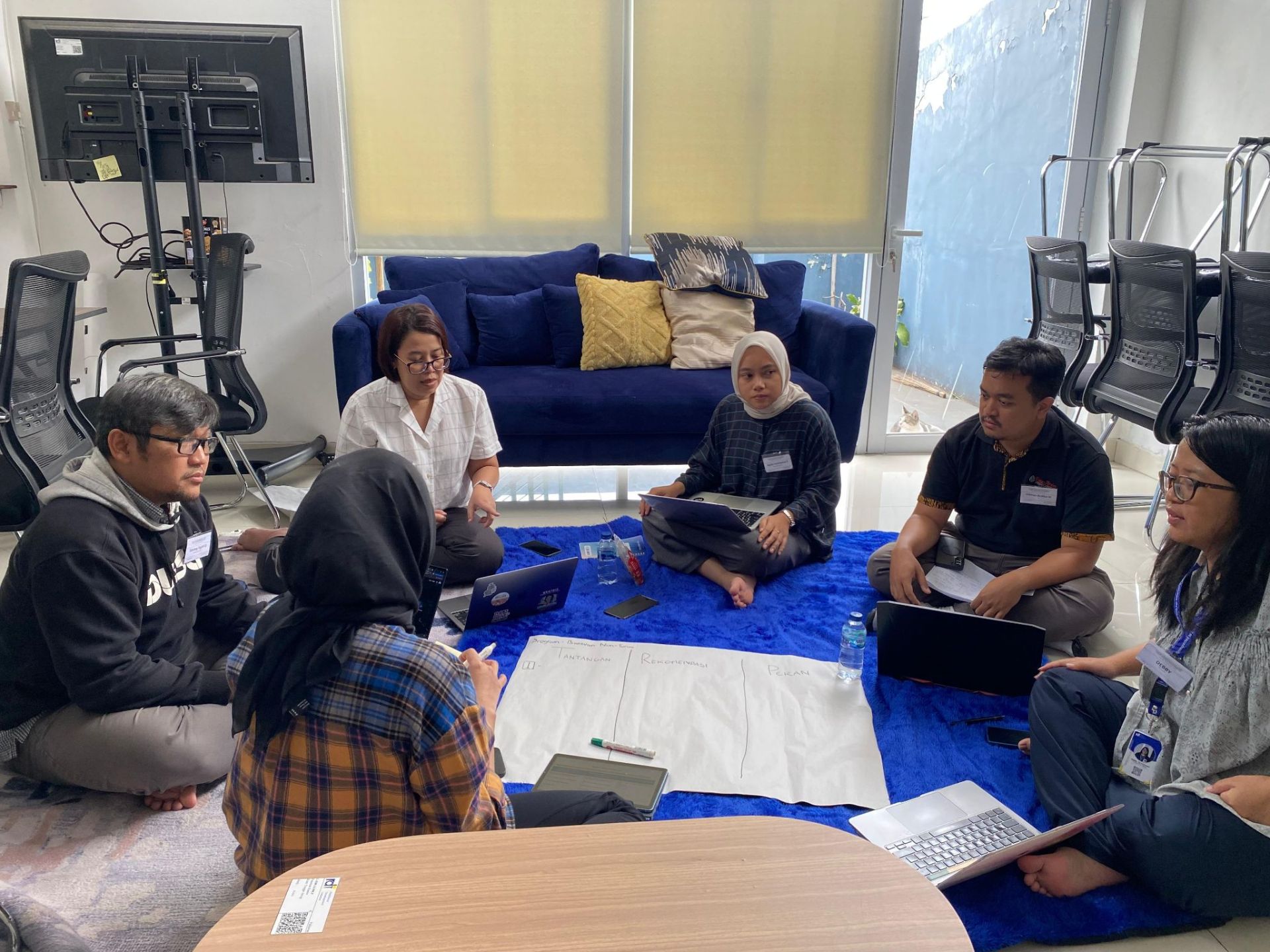
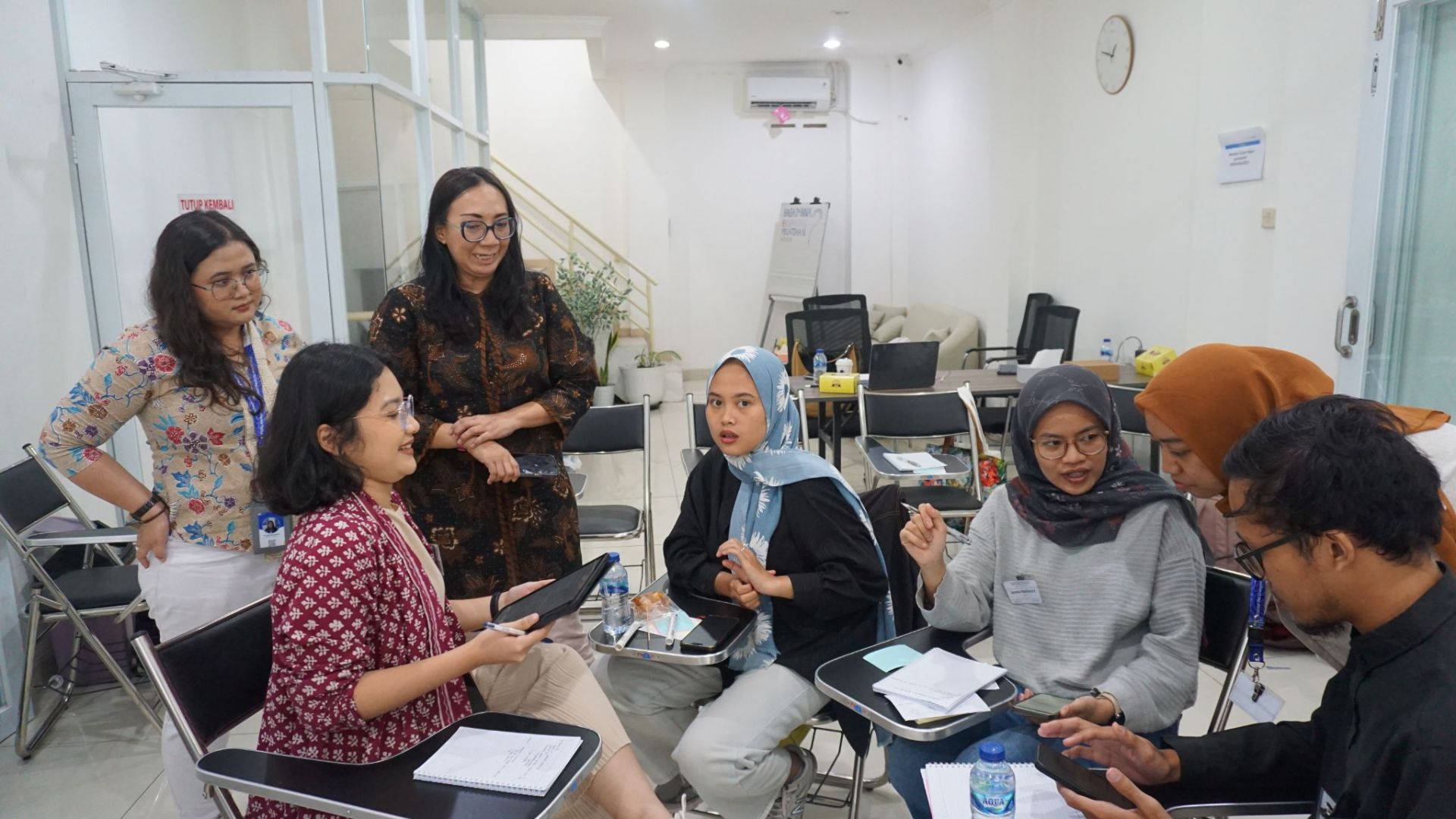 To deepen participants' understanding of the material, this training encourages the participants to analyze the implementation of ASP in different cases of disaster events. Participants were divided into three groups to create an action plan to implement ASP by examining the challenges in existing program implementation, providing recommendations, and identifying the roles of stakeholders in the execution. Three case studies were provided: the 2022 Cianjur Earthquake, the 2021 Tropical Cyclone Seroja in NTT, and the 2018 Palu Earthquake and Tsunami. This interactive discussion enhanced participants' understanding of how existing programs and initiatives in Indonesia align with ASP and explore ways to enhance their adaptability through the ASP four-pillar strategy.