
September 30, 2026
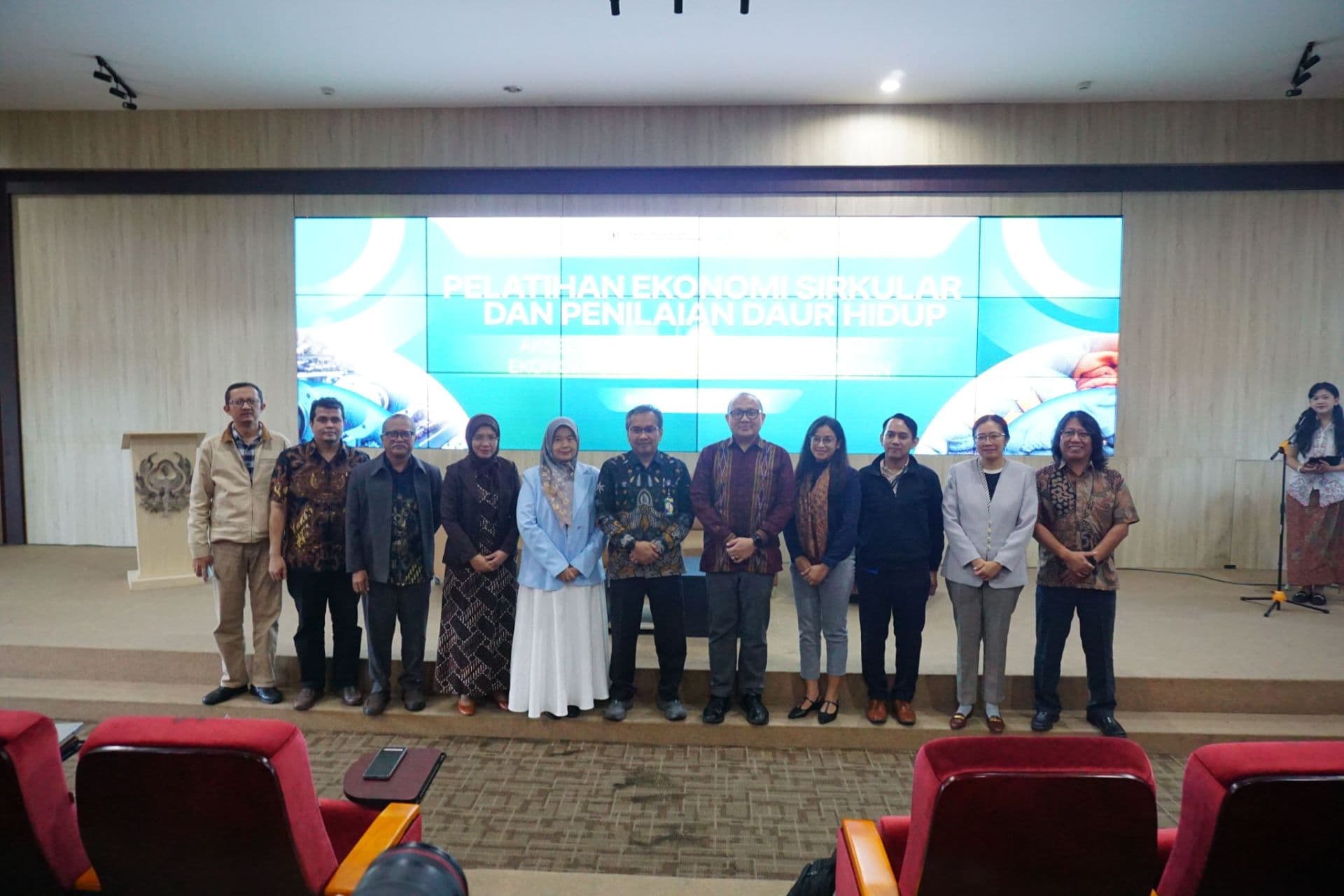
The Resilience Development Initiative (RDI), in collaboration with the United Nations Environment Programme (UNEP), the Ministry of National Development Planning/Bappenas, through the InTex Indonesia project, funded by the Government of Denmark, conducted a two-city training programme on Circular Economy and Life Cycle Assessment (LCA) for the Textile Industry. The sessions were co-delivered with the National Research and Innovation Agency (BRIN), James Cook University (JCU), Politeknik STTT Bandung, and Akademi Komunitas Industri Tekstil dan Produk Tekstil (AK-Tekstil) Solo.

 Held in Bandung on 14-15 July 2026 and Surakarta on 21-22 July 2026, the training brought together representatives from the textile and garment industry, business associations, academia, local governments, and students. The programme aimed to build practical technical capacity in circular economy frameworks and LCA methodology, preparing local industry stakeholders to meet tightening global sustainability standards.
Across both sessions, Nizhar Marizi, Director of Environment at Bappenas, presented Indonesia’s circular economy policy roadmap, highlighting the textile sector's central role in the national transition toward a resource-efficient economy.
The first day introduced participants to circular business models, international sustainability benchmarks, and cleaner production pathways across the textile value chain. Industry panels anchored the discussions with practical case studies: representatives from PT Evershine Tex and Nike shared operational insights in Bandung, while PT Primatexco Indonesia, CV Smart Batik, and the Indonesian Textile Association (API) Central Java led discussions in Surakarta.
Day two focused on Life Cycle Assessment methodologies compliant with ISO 14040 and ISO 14044 standards. Participants worked through core LCA phases: defining goal and scope, setting functional units, compiling inventory data, and evaluating impact indicators. A dedicated, hands-on workshop using InTex Indonesia datasets allowed attendees to calculate real-world metrics, isolate environmental hotspots, and pinpoint operational decarbonisation opportunities.
By connecting policymakers, researchers, and manufacturers, the initiative establishes a practical foundation for advancing closed-loop textile production and securing Indonesia's export competitiveness.